Intranet consultancy that helps you achieve long-term intranet success
Here at Claromentis, our team of intranet experts take a long-term, collaborative approach to ensuring the success of your intranet. We offer a range of intranet consultancy services, from e-learning courses on our support portal to one-to-one consultancy sessions.
Our digital workplace is designed to ensure it’s easy to use for all industries. But we understand that a helping hand is often needed when deploying a new intranet, so we provide specialist guidance on intranet best practices, at any stage in your project.
Book a demoGet 24/7 access to our online support portal
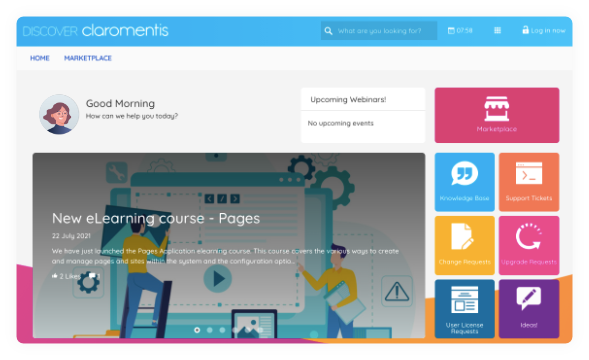
As as Claromentis customer, your organisation will have free and unlimited access to our online support portal, Discover. There you’ll find articles to help you assemble a project team, create an intranet strategy, and decide on the right content management approach. You can also post questions to gain insights from other customers, take our interactive e-learning courses, and share ideas with our product development team to let us know how we can enhance our platform.
We provide consultancy to help you launch a successful intranet
In the run-up to your intranet launch, we can provide intranet consultancy and guidance on important topics such as user management, document storage, intranet content, e-forms, learning management, and web design. We can combine consultancy sessions with your intranet software training, and we’ll always align it with your business objectives.

We'll help you identify which areas of your intranet need improvement
In addition to our support portal – which is packed full of helpful resources – we can help you identify which areas of your intranet are working well, and which areas need improvement. We’ll work with you to develop methods to measure success, whilst our ongoing product updates will ensure your intranet benefits from a steady flow of new functionality and feature enhancements.

We host webinars and drop-in sessions to support your intranet managers
As part of our intranet consultancy, we run pre and post-launch drop-in sessions to give your intranet project team an opportunity to ask questions and collaborate with our intranet consultants. These open sessions will also provide you with valuable advice about managing an intranet, such as improving adoption rates and reducing resistance to change.