Choose the best intranet hosting option to suit your business
We provide flexible intranet hosting options to suit your business needs, support your internal infrastructure, and reflect your scalability strategy. So whether you choose a cloud based intranet or decide to host it on-premise, our teams are here to help you get intranet-ready and start delivering value to your teams.
Book a demoOur hosted intranet solutions
We provide two options for hosting your intranet: in the cloud, or on-premise. We use Google Cloud Platform to host our cloud intranets, providing high levels of intranet security, reliability, and performance. On-premise intranets are installed on your own internal infrastructure, ideal for businesses with dedicated IT teams or corporate firewalls.
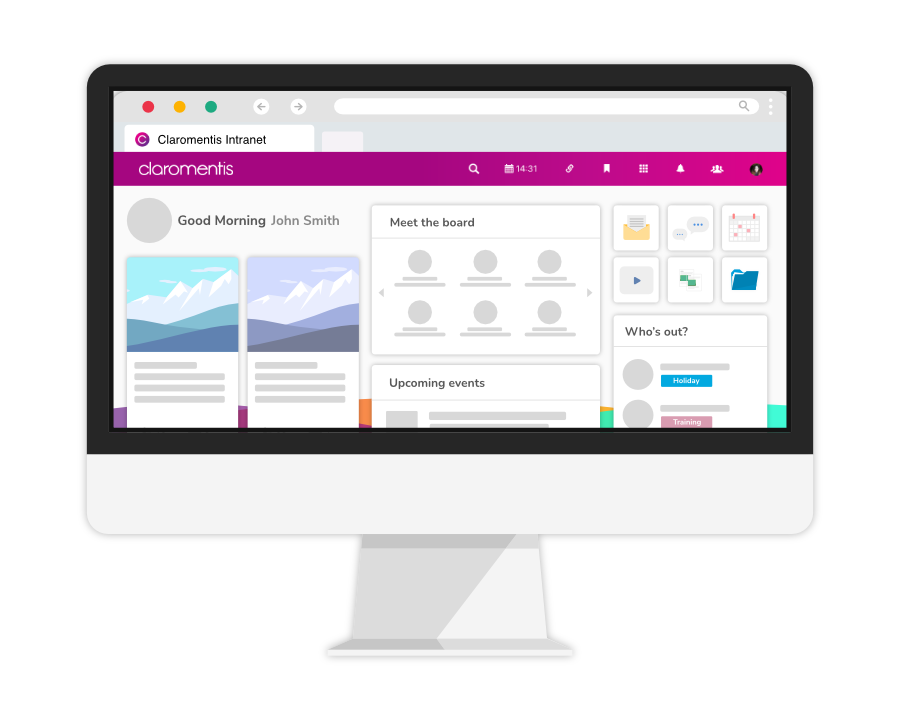
Why choose a cloud hosted intranet?
Bring cloud computing to your business with our fully hosted cloud based intranet package. Our cloud intranet solution provides your organisation with a simple, hassle-free intranet setup that will save time, remove the need for internal tech expertise, and get you intranet-ready in weeks.
Our monthly subscription covers your intranet software license, installation, cloud hosting on Google Cloud Platform, bandwidth, system backups, upgrades, and customer support.

Why choose on-premise intranet hosting?
If you have the dedicated hardware and IT resources on hand, you can choose to host your company intranet on your own internal infrastructure, giving you complete control over your intranet server.
Our on-premise intranet solution gives your teams the flexibility to add corporate firewalls, increase company data storage as you scale up, and budget for the year ahead thanks to our annual pricing package.